


Via Ferrata lanyards
Via ferrata, that subtle blend of vertical hiking and protected climbing, attracts more participants every year, whether beginners or experienced adventurers. But to make the most of the experience, the right equipment is essential. Among the key safety components, the via ferrata lanyard plays a central role. This link between you and the lifeline is far more than just an accessory – it is a genuine shock-absorbing system that can save your life in the event of a fall.
Read more Show less

-
Recommended price
£96.71
-9%
£87.91
-
Recommended price
£79.11
-11%
£70.31
-
Recommended price
£109.91
-16%
£92.31
-
Recommended price
£114.31
-15%
£96.71

Loading...
What exactly is a via ferrata lanyard?
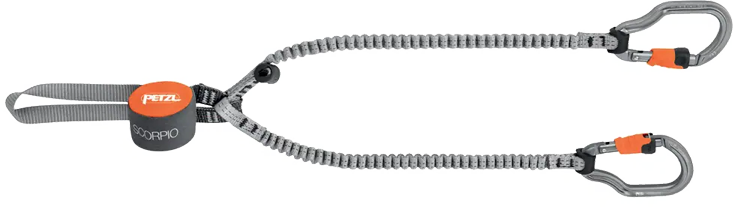
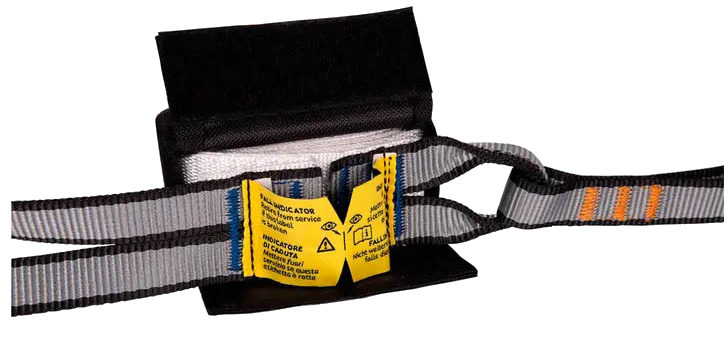
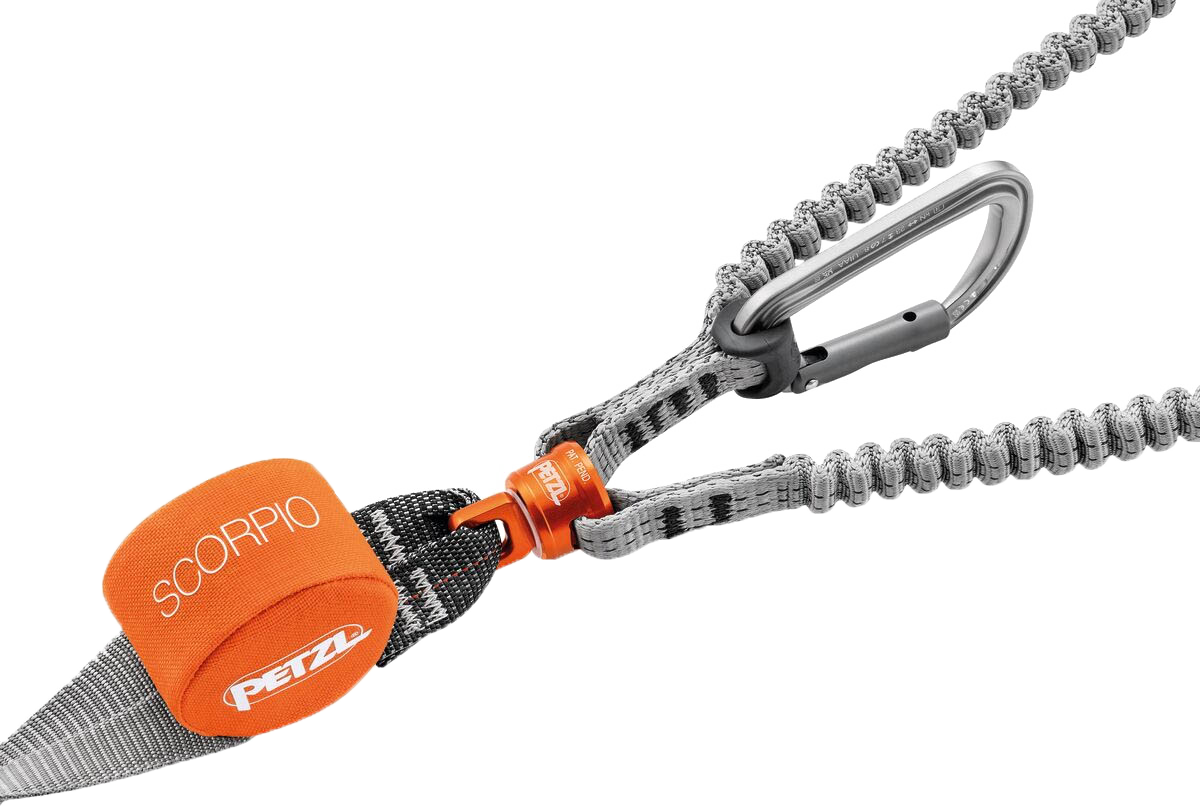
A via ferrata lanyard is a Y-shaped system made up of two arms connected to an energy absorber, itself attached to the harness. At the end of each arm is a special via ferrata carabiner, designed to be easily operated with one hand, even when wearing gloves. The energy absorber is a device that limits the impact force in the event of a fall. Most commonly, this is a tear-webbing system, calibrated to dissipate the energy generated by the fall and reduce the shock load on the body. In the event of a fall, the absorber’s pouch opens to release the webbing, which gradually tears in a controlled way to slow the fall until it is fully deployed. This acts as a braking system so that the final impact is as gentle as possible.
Unlike a static lanyard used in climbing, a via ferrata lanyard is dynamic thanks to its absorber, making it capable of withstanding the significant falls characteristic of the discipline. It should never be improvised or replaced by homemade slings or a piece of rope – only an EN 958 certified lanyard ensures optimal protection.
Why use a specific lanyard?
On a via ferrata, falls are rarely short. Anchors are often spaced apart, and it’s common to find yourself above the last attachment point. A fall in this position can generate a high fall factor, much greater than in conventional climbing. In climbing, it’s the dynamic rope (often several dozen metres) that gently absorbs the fall’s energy. In via ferrata, it’s the short lanyard that must dissipate this energy.
A via ferrata lanyard is therefore much more than a sling with two carabiners – it’s designed to absorb the energy of a major fall while minimising the consequences for the climber. This is why it is always recommended to buy a complete via ferrata kit, including lanyard, harness and helmet, for maximum safety.
Understanding the difference between a via ferrata lanyard and a climbing lanyard:
- The climbing lanyard, or ‘cow’s tail’, is static. It’s used to clip into a fixed point for safety or rest and can also be used to clip a pulley for a zip line. However, it is not designed to withstand a fall above the attachment point. In such a case, the shock force would be so great that the climbing lanyard would break or rip out the anchor. Using this type of lanyard for via ferrata is strictly prohibited.
- The via ferrata lanyard, by contrast, is specifically designed to dissipate energy in the event of a fall above the anchor point, protecting both the climber, the equipment and the anchor itself. This specialised type of lanyard helps to avoid fall factor 2, at the cost of a greater fall height.
Choosing your via ferrata lanyard, alone or as part of a kit
1. The type of carabiners
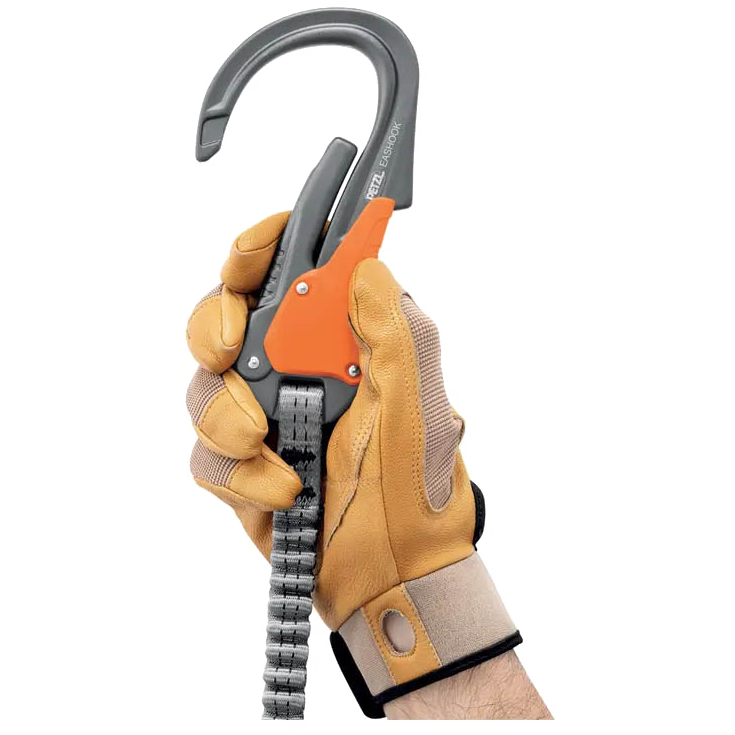
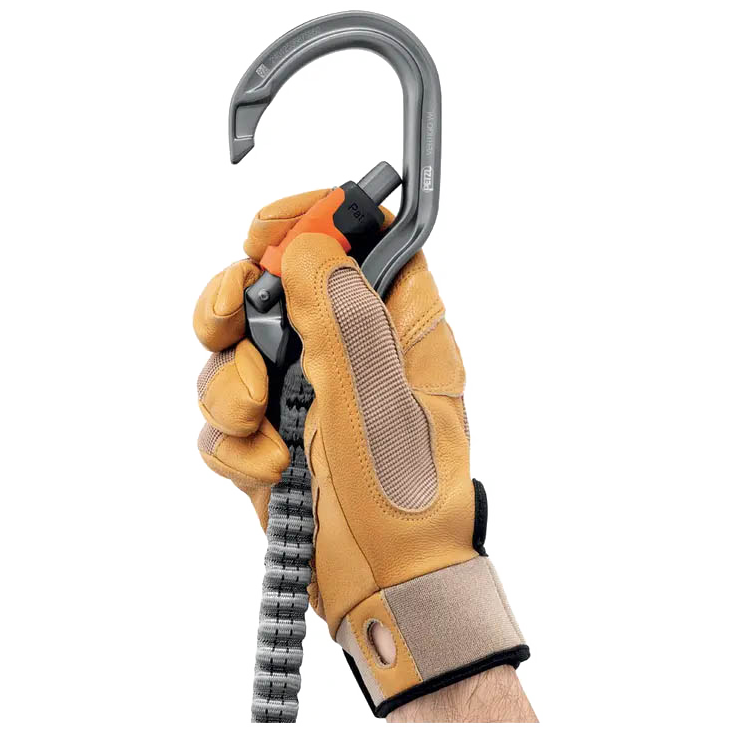
Carabiners used on via ferrata lanyards are auto-locking, often type ‘K’ (for Klettersteig in German). They should be ergonomic, easy to clip and unclip with one hand, even under stress. Some high-end models feature a wide gate opening or an anti-twist system to prevent the lanyards from tangling.
2. The energy absorber
The latest shock absorbers all use a progressive tear-webbing system stored inside a textile pouch. In the event of a fall, the webbing tears over a calibrated length to dissipate the energy without overly jolting the body. Always ensure that the lanyard complies with the EN 958:2017 standard, the most recent, which guarantees absorber effectiveness for a wide weight range (40 kg to 120 kg including equipment).
3. Comfort and compactness
Some lanyards offer extra features such as a third rest sling with an integrated carabiner, handy for taking a break on a rung. Finally, size and weight can make a difference if you’re heading out for a long day in the mountains or carrying your gear over multiple approaches.
Which equipment to use with your lanyard?
A harness:
For a lanyard to work, it must be used with a comfortable, well-fitted climbing harness designed for vertical activities. This harness will also allow you to attach a pulley with its carabiner to one of the gear loops.
A helmet:
Wearing a climbing helmet is also essential. In the event of a fall or rockfall, it effectively protects the head – often the first part of the body exposed in this type of activity. Glisshop offers a selection of light, well-ventilated helmets suited to vertical pursuits.
A pulley for zip lines:
For via ferratas with a zip line, you’ll need to add a pulley to your kit. There are now two types of pulleys suitable for via ferrata:
The Petzl Tandem Speed pulley:
The classic pulley that lets you enjoy maximum speed along the cable to reach the other side without difficulty.
The Petzl Track pulley or Camp Wing pulley:
These two newer models clip directly and intuitively onto the cable.
For practical reasons, it is often necessary to have a small permanent static lanyard to connect the pulley to the harness’s belay loop, even though some shock absorbers have a dedicated loop for this purpose. A dedicated lanyard helps avoid dropping equipment on the via ferrata.
Frequently Asked Questions:
When should you replace your lanyard? What is its lifespan?
A via ferrata lanyard does not last forever. For regular use, replacement is recommended every 3 to 5 years, even without a fall. If the absorber has been deployed in a fall, the lanyard must be replaced immediately, even if it looks intact. A simple visual inspection may not always reveal a partial tear or structural weakness.
How to correctly attach your via ferrata lanyard?
In via ferrata, safety depends on reliable, properly used and well-maintained equipment. The lanyard is the central element of your protection system – do not neglect it. At Glisshop, our selection of via ferrata lanyards meets the needs of both beginners and experienced practitioners. The lanyard is attached to the harness’s belay loop with a lark’s head knot. This can be a little fiddly if you’re not used to it, as the space near the shock absorber loop is limited, but with a bit of patience it’s straightforward.
What is the price of a via ferrata lanyard?
New via ferrata lanyards with shock absorbers cost between £80 and £100 depending on the brand’s reputation and the carabiners used. Be cautious with second-hand equipment – a via ferrata lanyard is Personal Protective Equipment, and it’s always difficult to know the history of such gear.
Feel free to contact us for personalised advice – our team, passionate about the mountains and climbing, is here to help you make the right choice.