


Via Ferrata pulleys
While most via ferrata routes feature only rungs, walkways or monkey bridges, some more modern or fun itineraries include zip lines. To cross them safely, you’ll need a suitable via ferrata pulley. Often overlooked or used incorrectly, the pulley is nonetheless a key part of your via ferrata kit if you want to enjoy these aerial sections to the full – and with peace of mind.
Read more Show less

Loading...
What is a via ferrata pulley?
A pulley is a small mechanical device designed to glide – or rather roll – along a steel cable, generally used to cross a zip line. It is fitted with two ball bearings, aluminium side plates, and sometimes handles to make installation easier. Unlike pulleys used in caving or mountaineering for hauling systems, the via ferrata pulley is specifically designed for the taut steel cable of zip lines.
Some via ferrata routes include these playful sections as optional variants or as mandatory crossings. Having the right pulley is therefore essential, as using an unsuitable model (such as a rope pulley) can cause jamming, falls or rapid wear of the device.
Why use a specific high-speed pulley for zip lines?
Via ferrata cables are usually between 10 and 13 mm in diameter and made of braided steel. This material requires a pulley certified for steel cable, with a reinforced design and bearings suited to high rotation speeds.
Pulleys for steel cable have rounded grooves and reinforced side plates to prevent abnormal friction. They are also designed to withstand the high tension of zip lines (often more than 2 tonnes). A standard rescue or textile rope pulley will not cope and may wear prematurely or even break under load.
Criteria for choosing a via ferrata pulley
1. Cable compatibility
Always check the maximum cable diameter accepted by the pulley. Most zip lines use 12 mm cable, but it’s best to choose a pulley compatible with at least 13 mm. Some models, such as the Petzl Trac or Tandem, are specifically designed for this type of setup.
2. Type of bearing
For smooth travel and minimal wear, opt for sealed ball bearings, which are more durable than self-lubricating bushings, especially for intensive use. They offer better efficiency, which helps avoid jerks at the end of the zip line and reduces friction.
3. Secure attachment system
Modern pulleys are generally lockable, to prevent them from accidentally opening on the cable. Some models also have ergonomic handles to make installation on the cable easier, even with gloves.
The Petzl Tandem Speed: a historic benchmark!
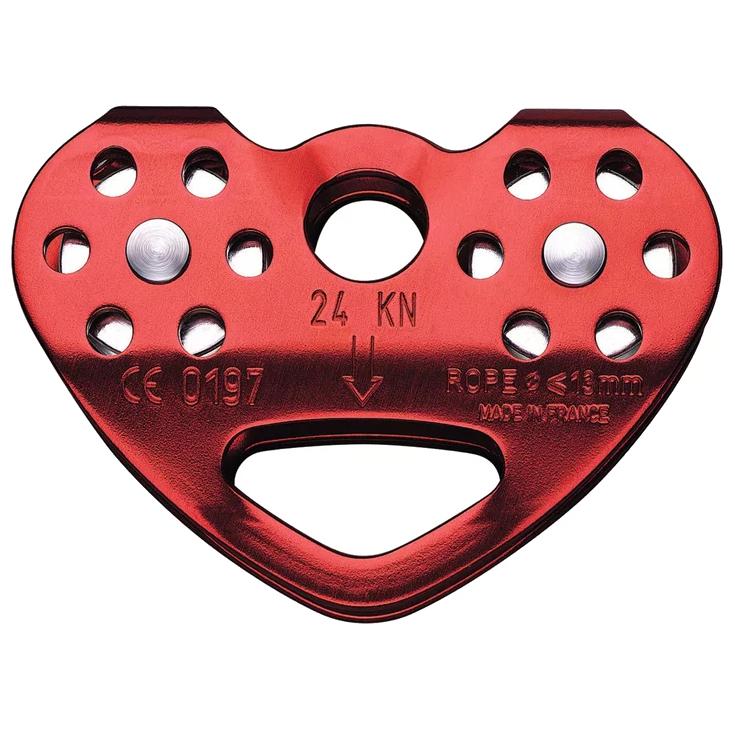
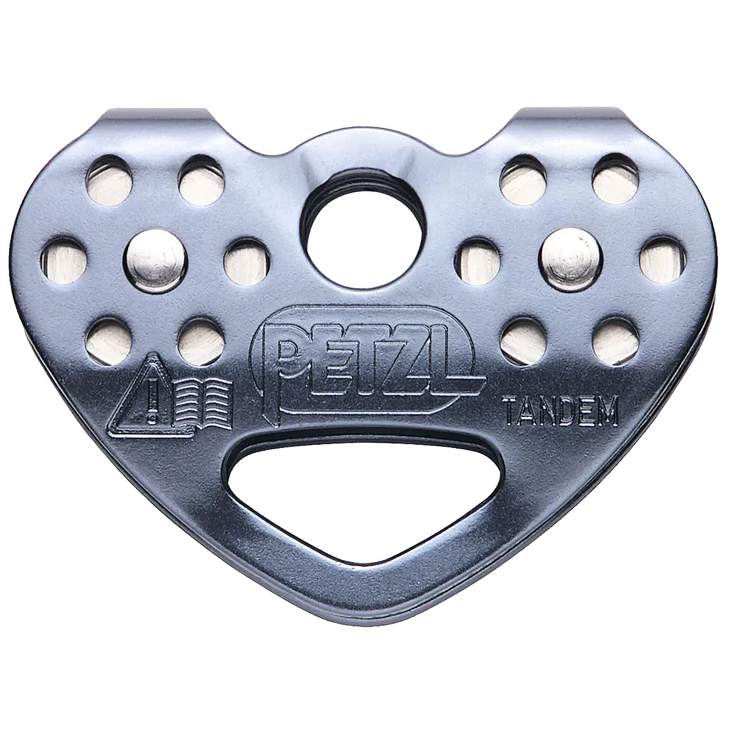
As is often the case in the world of vertical activities, Petzl has been a pioneer in zip line pulleys. The brand first launched its classic Tandem pulley, with a maximum authorised speed of 10 m/s. As zip lines have become longer – and therefore steeper – Petzl developed a more efficient pulley: the Tandem Speed. With 95 % efficiency and a maximum authorised speed of 20 m/s, gone are the days of stopping halfway across the cable. The Petzl Tandem Speed pulley has become the reference for all via ferrata enthusiasts.
EN 17109 standard: the new regulation for adventure parks
Since 2021, the new EN 17109 standard for high ropes courses has introduced the concept of being drop-proof and offering finger protection. The Petzl Tandem and Tandem Speed pulleys therefore do not officially comply with this new regulation, although they can still be used on cable as before.
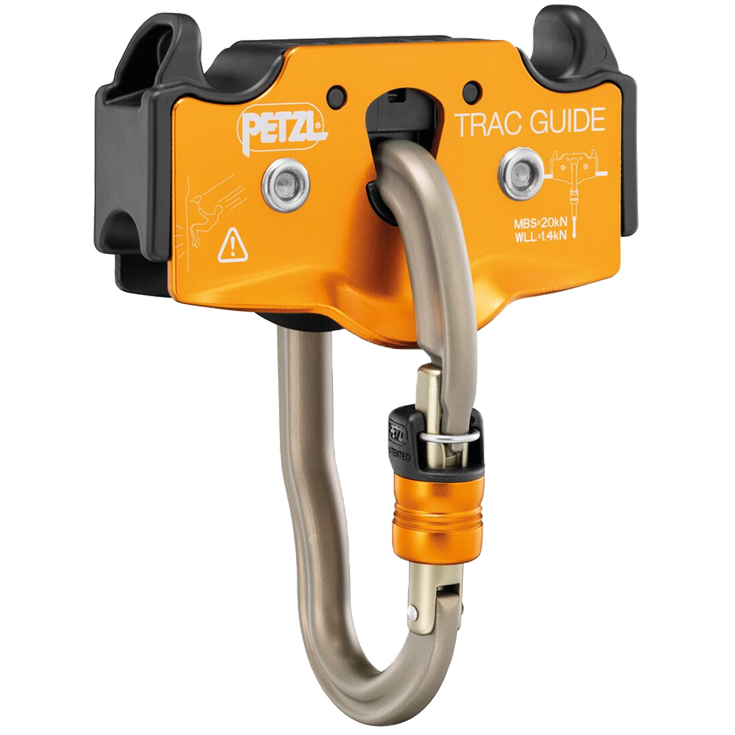
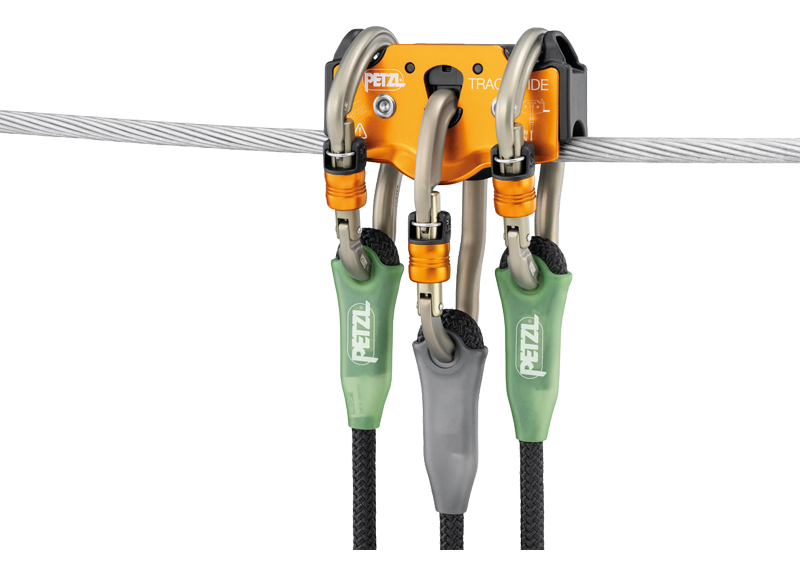
The French brand therefore recommends that new users switch to Trac pulleys / Trac Guide pulleys, designed to be drop-proof (always attached to the harness) and to better protect the fingers in case of misuse.
New, even more user-friendly models for beginners: Petzl Trac and Camp Wing 2
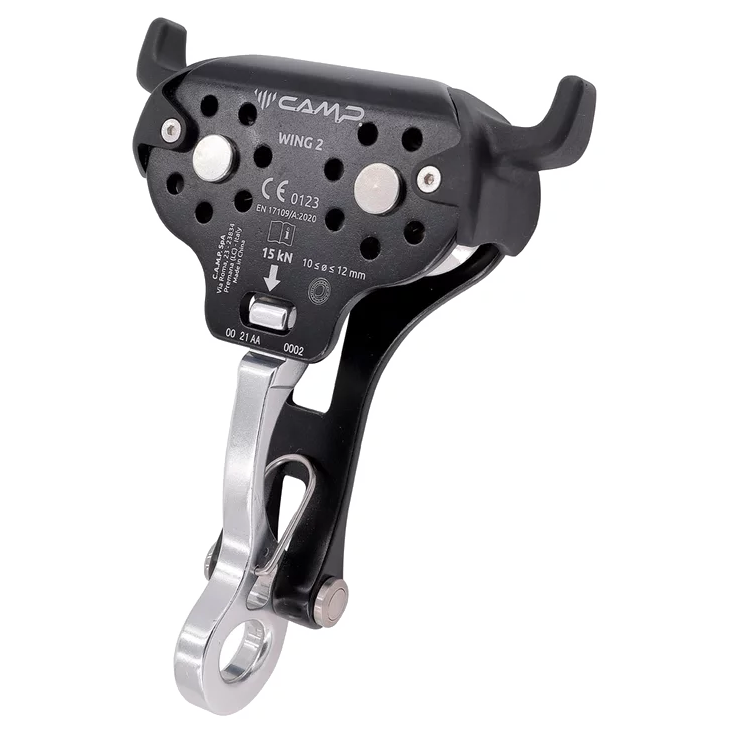
This new generation of pulley is compliant with the EN 17109 standard that governs high ropes courses. These new pulleys are always attached to the harness via a lanyard. On the Petzl Trac, the pulley’s safety auto-locking carabiner is fixed and only opens to clip or unclip the pulley from the cable. On the Camp Wing 2, the pulley itself auto-locks once the cable is inserted, and the safety carabiner remains permanently connected to the pulley’s lower eye.
This design prevents any loss of equipment during handling.
In terms of performance, the Petzl Trac pulley can reach up to 25 m/s and the Camp Wing 2 up to 20 m/s.
The downside is that these new pulleys are much heavier than the well-known Tandem models.
Comparison of different steel cable pulleys for via ferrata
| Petzl Tandem | Petzl Tandem Speed | Petzl Trac Guide | Camp Wing 2 | |
| EN 17109 certification | No | No | Yes | Yes |
| EN 12278 certification | Yes | Yes | Yes | Yes |
| Max peak speed | 10 m/s | 20 m/s | 25 m/s | 20 m/s |
| Weight | 195 g | 195 g | 425 g | 344 g |
Maintenance and equipment safety
Inspect your pulley regularly: check the condition of the side plates, grooves and bearings. Rinse it in clean water after each outing and lubricate if necessary, following the manufacturer’s recommendations. Never use a rusty pulley.
Complete via ferrata kit check list:
- 1 climbing harness
- 1 climbing helmet
- 1 via ferrata lanyard with shock absorber
- 1 pulley for zip lines with safety carabiner
- 1 static climbing lanyard
- 1 backpack with water
Frequently Asked Questions:
Which pulley should I choose for via ferrata? Our opinion:
While the Tandem Speed enjoyed its heyday and remains a highly reliable piece of equipment for travelling along cable and rope, the new Trac and Wing models bring an unrivalled intuitive feel. With this type of gear, there’s no hesitation or risk of error when you’re facing a zip line cable. It’s clear that the new EN 17109 standard was designed to improve safety for occasional or novice participants. For new via ferrata equipment, we wholeheartedly recommend investing in these drop-proof pulleys.
How to use your pulley on a via ferrata?
First, check whether the zip line is free-running or fitted with an end brake. Some courses require the use of a short lanyard or a braking system. Don’t just launch yourself headlong – anticipate your speed and be ready to brake with your feet if necessary.
Always use your pulley in combination with a properly adjusted climbing harness (attached to the central belay loop) and don’t forget to wear a climbing helmet to protect against impact with the cable or structure.
If you have any doubts about the cable setup or the zip line’s condition, don’t attempt it. It’s better to bypass the obstacle than take an unnecessary risk.
The via ferrata pulley is an essential accessory for making the most of zip lines. It ensures smoothness, safety and enjoyment on the most exposed routes. At Glisshop, we select robust, reliable models tested by enthusiasts. If you’re heading out soon on a via ferrata with a zip line, make sure your kit is complete and that you practise using it. And as always, never forget your climbing harness, your climbing helmet and a pair of via ferrata gloves!