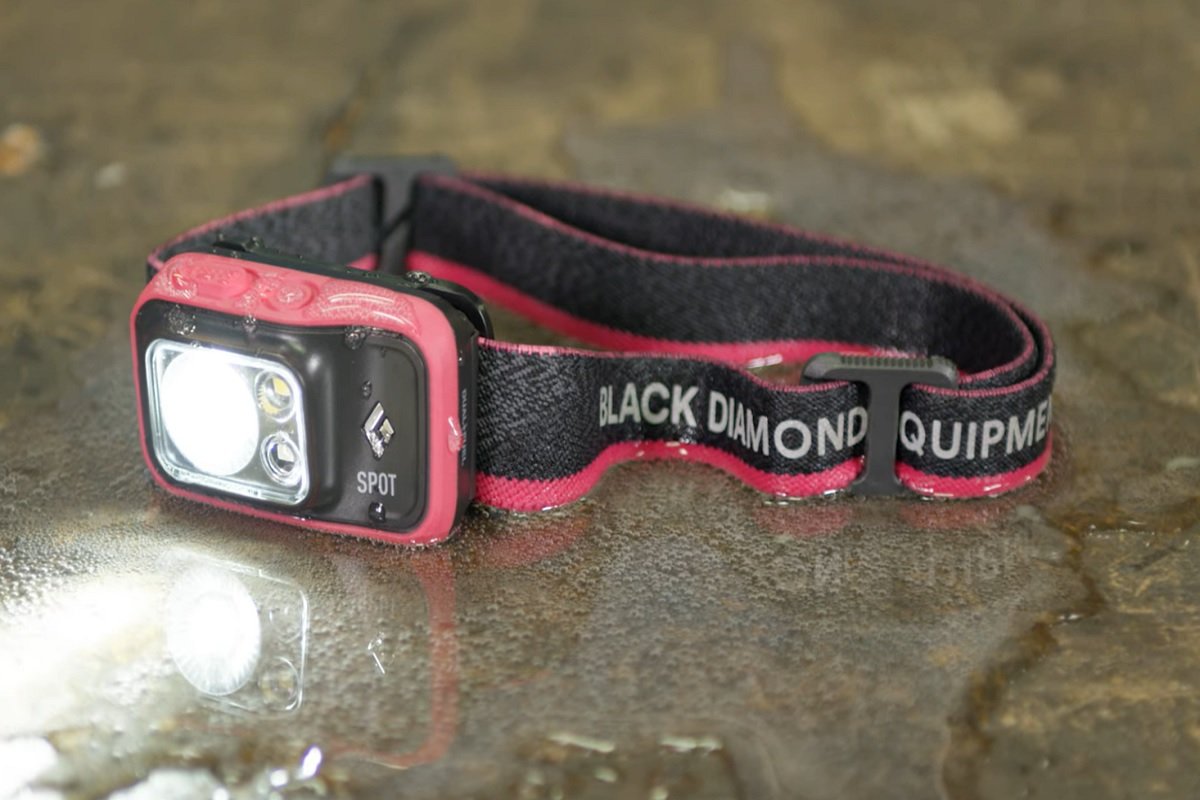
Several factors determine the choice of a suitable head torch: type of activity, brightness, battery life, weight, power source, and waterproof rating. Whether you’re trail running, hiking, bivvying or mountaineering, this essential piece of kit allows you to enjoy your passion after dark.
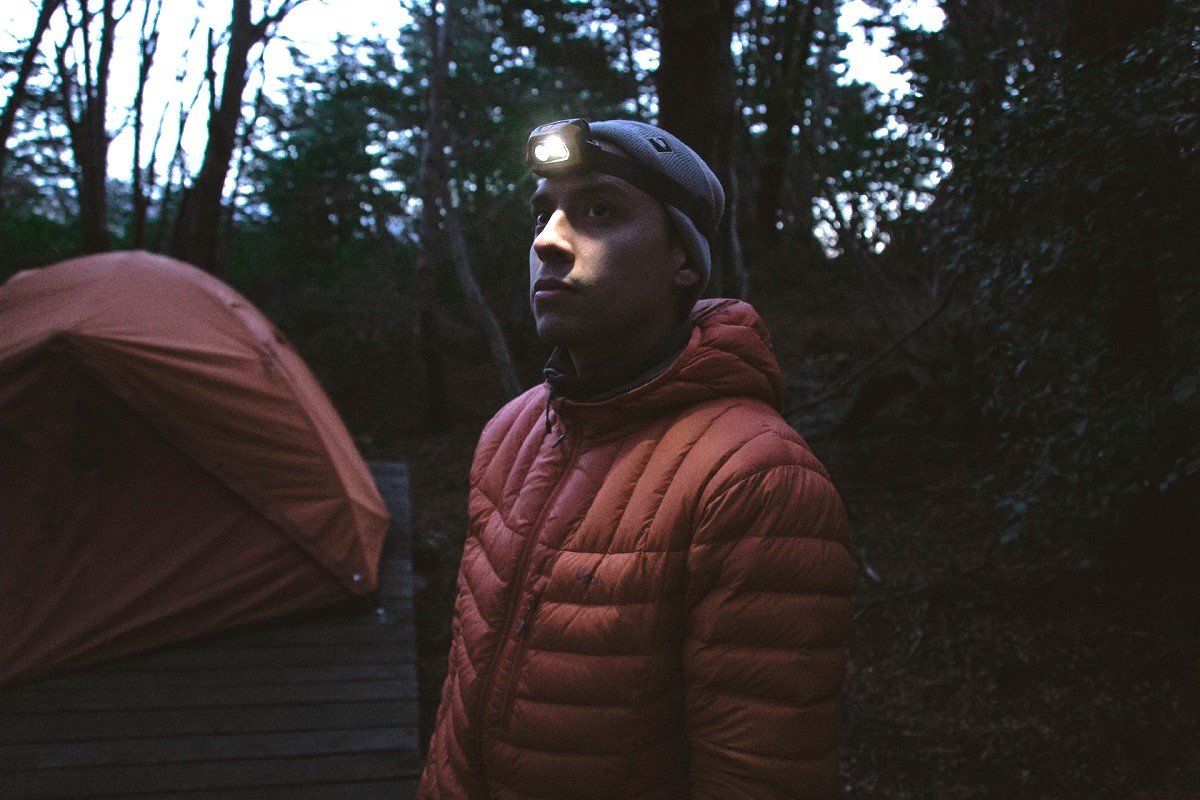
Main takeaways
- Select the appropriate lumen output according to the activity you’re undertaking.
- Check the water resistance rating using the manufacturer’s IP code.
- Battery-powered headlamps provide simplicity and extended runtime.
- Rechargeable models are environmentally friendly and convenient for long-term use.
- A hybrid headtorch combining batteries and a rechargeable cell offers maximum versatility.
Selection criteria for an LED headlamp
For optimal performance, it is essential to choose a headlamp suited to your activity, the frequency of your outings, and your requirements in terms of battery life and brightness.
Brightness (lumens)
Modern head torches use LEDs (light-emitting diodes) which offer:
- powerful illumination
- low energy consumption
- a long lifespan
What does the lumen rating mean?
Lumens measure the total amount of light emitted. The higher the number:
- the brighter the beam
- the greater the power consumption
Important: the lumen output alone does not determine beam range. The beam pattern also plays a key role.
Red light mode
If you want to remain discreet in the outdoors or avoid dazzling others while chatting around the stove, opt for a headlamp with a steady red light mode.
Battery life
Battery life is a key factor. It should be selected according to the actual expected duration of use and the type of activity.
Depending on the model, it can range from a few dozen hours to over 200 hours.
What affects battery life
Power consumption
The more you use the lamp at high intensity:
- the higher the energy consumption
- the shorter the battery life
The ‘maximum power’ mode significantly reduces runtime, unlike the close-range lighting mode.
Beam type
Focused LEDs (narrow beam) and unfocused LEDs (wide beam) have different impacts of power consumption.
- A powerful focused beam may consume more energy.
- A diffuse close-range mode is generally more efficient.
The chosen lighting configuration directly influences operating time.
How to choose
Ask yourself three questions:
- How long will I actually use the lamp at full power?
- Do I have easy access to recharging or spare batteries?
- Does my activity require constant, powerful illumination?
For occasional or static use, an average battery life is more than sufficient. For extended use, opt for a model offering long runtime in medium mode, not just in low mode.
Good practice
Always check the stated battery life for each lighting mode. Manufacturers usually specify:
- runtime in economy mode
- runtime in standard mode
- runtime in maximum mode
Beam width
The beam width (expressed in degrees) determines how the light is distributed. It is a more relevant criterion than lumen output when adapting lighting to a specific outdoor activity.
Narrow beam (10° to 30°)
Recommended use: fast-paced activities requiring long-range visibility.
Principle: the light is concentrated within a narrow angle, increasing beam distance.
Advantages:
- Long-distance visibility
- Better anticipation of terrain and obstacles
- Precise reading of the ground
Suitable for:
- Trail running
- Ski touring
- Alpine climbing
- Fast mountain travel
Best suited when anticipating terrain is more important than lighting the surroundings widely.
Wide beam (40° and above)
Recommended use: static or low-speed activities.
Principle: the light is evenly diffused over a broad area.
Advantages:
- Good peripheral vision
- Visual comfort at short distance
- Even illumination of the immediate environment
Suitable for:
- Setting up camp
- Handling equipment
- Reading a map at close range
Best suited when close-range visibility and visual comfort are the priorities.
Mixed beam (wide + focused)
Recommended use: versatile or technical activities.
Principle: a combination of a wide base for peripheral vision and a central focused beam for distance.
Advantages:
- Near and far vision
- Adapted to varied terrain
- Best balance between performance and comfort
Suitable for:
- Hiking
- Trekking
- Mountaineering
- Caving
This is the most versatile option for those practising multiple disciplines.
Water resistance
If you’re heading out at night in rain or snow, waterproofness is not a minor detail, it’s a matter of reliability. The protection level is indicated by the IP rating (Ingress Protection). This classification assesses a device’s resistance to water.
How to read the IP rating
The IP rating consists of two digits. For a head torch, the second digit (water resistance) is the most important.
Simplified reference:
- IPX1: protected against vertical water drops (light rain).
- IPX4: protected against splashing water (heavy rain).
- IPX7: protected against temporary immersion.
- IPX8: protected against prolonged immersion (duration defined by the manufacturer).
The higher the number, the greater the protection against water.
Which level to choose
For occasional hiking: IPX4 is generally sufficient.
For trail running, mountaineering or uncertain weather conditions: IPX6 to IPX7 provide better safety.
For demanding use (caving, extreme conditions): IPX8 offers maximum protection.
The advantages of using a battery-powered headtorch
Battery-operated models remain highly relevant, particularly for extended use or complete self-sufficiency in the field.
Instant power replacement
Key benefit: no reliance on a mains power source.
- Simply replace the used batteries.
- Ideal for trekking, expeditions, or remote areas.
- No need to plan for a charging cycle.
This is a straightforward and reassuring solution when access to electricity is limited.
Extended runtime
Some battery-powered headlamps can deliver up to 200 hours of runtime depending on the lighting mode. For equivalent capacity, disposable batteries generally provide longer operating time than a rechargeable battery, often up to twice as much. This makes them suitable for:
- long-duration trips
- intermittent use over several days
- situations where recharging is not possible
More affordable
Battery-powered models are often cheaper to buy than rechargeable versions. They are particularly suitable for:
- occasional users
- those seeking a simple, reliable product
- people wishing to keep their initial investment low
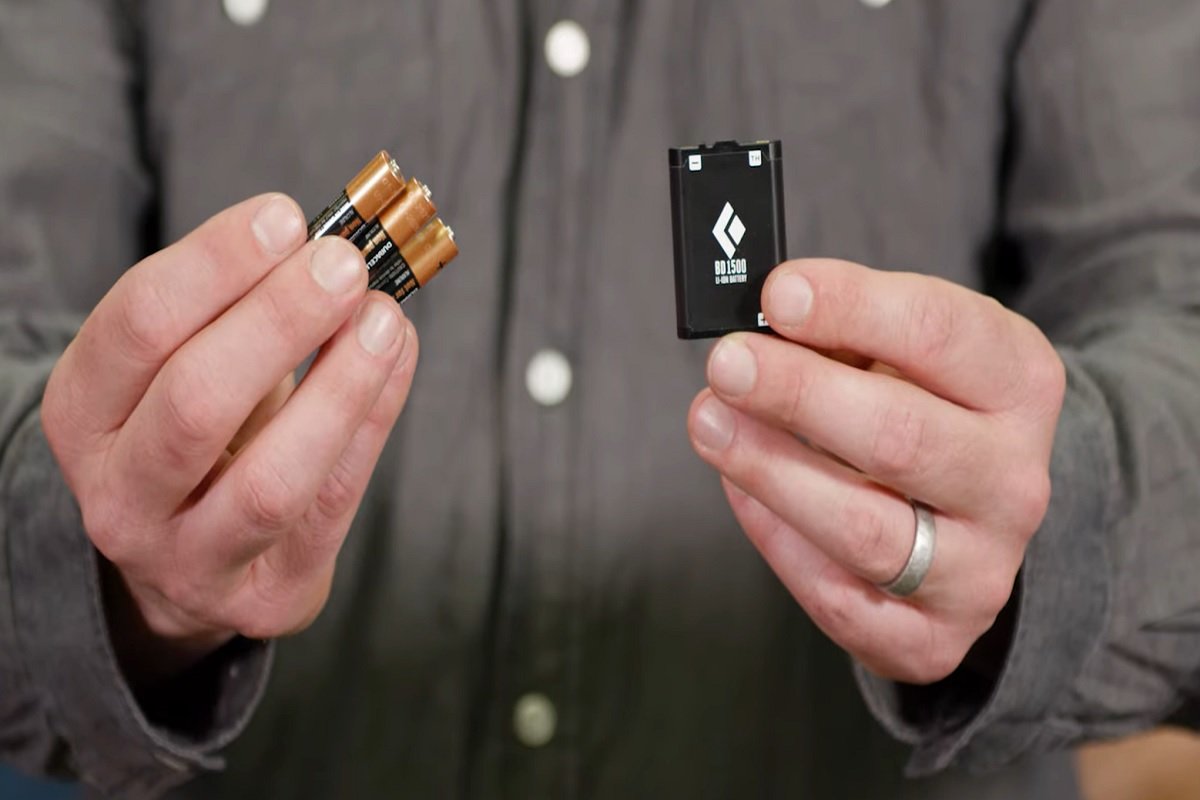
The benefits of a rechargeable headlamp
Rechargeable models are ideal for regular use and align with a sustainable approach.
Long-term cost-effective solution
Main advantages:
- The battery can be recharged as often as needed
- No need for repeated battery purchases
- Cost offset over time
- Better suited to frequent use
Although the initial purchase price is higher, the investment quickly pays off for regular users.
A more sustainable choice
Fewer disposable batteries mean less waste and a lower environmental footprint over time. For weekly activities such as trail running, hiking, or ski touring, a rechargeable option is generally the most sensible choice.
Independent recharging
On expeditions far from any power source, a portable solar panel can be used to recharge the battery.
However, be aware that:
Solar charging depends heavily on sunlight and weather conditions and does not always guarantee continuous power.
Hybrid models: rechargeable battery + disposable batteries
Some headlamps operate:
- either with a rechargeable battery
- or with standard disposable batteries
Advantages:
- Extra safety in case the battery runs out
- Adaptability to unpredictable conditions
- Maximum versatility
This is often the safest option for demanding activities or expeditions.
Headlamp or chest lamp?
The choice mainly depends on the level of comfort desired and the type of activity.
Headlamp (worn on the head)
Principle: secured with an adjustable strap around the head.
Advantages:
- The beam follows your line of sight
- Completely hands-free
- Suitable for most outdoor pursuits
- Simple and intuitive adjustment
Recommended for:
- Trail running
- Hiking
- Mountaineering
- Ski touring
- Bivvying / camping
Chest lamp (worn on the torso)
Principle: secured around the chest.
Advantages:
- Stable beam directly in front of you
- Even light distribution
- Less pressure on the head
- Greater comfort over long periods of time
Particularly suitable for:
- Long-distance trail running
It reduces discomfort caused by wearing a head strap for prolonged periods.
Choosing a head torch according to the activity
Which model is best for bivvying and camping?
For bivvying, maximum brightness is not the main priority.
What really matters:
- A wide beam
- Even, diffused light
- Comfortable illumination at close range
The goal is to see clearly around you without creating harsh shadows. This type of lighting is perfect for:
- pitching the tent
- organising your gear
- cooking
- moving around the campsite
An overly powerful, focused beam (long-range spotlight type) is often unnecessary for camping and can even be less pleasant to use.
Rechargeable or battery-powered?
Both options are suitable:
- Rechargeable head torch: more convenient and cost-effective in the long run, ideal if you have access to a power bank.
- Battery-operated head torch: offers greater flexibility for longer trips with no charging options.
In summary: prioritise lighting comfort (broad and soft beam) over raw power. For bivvying, versatility and ease of use make all the difference.
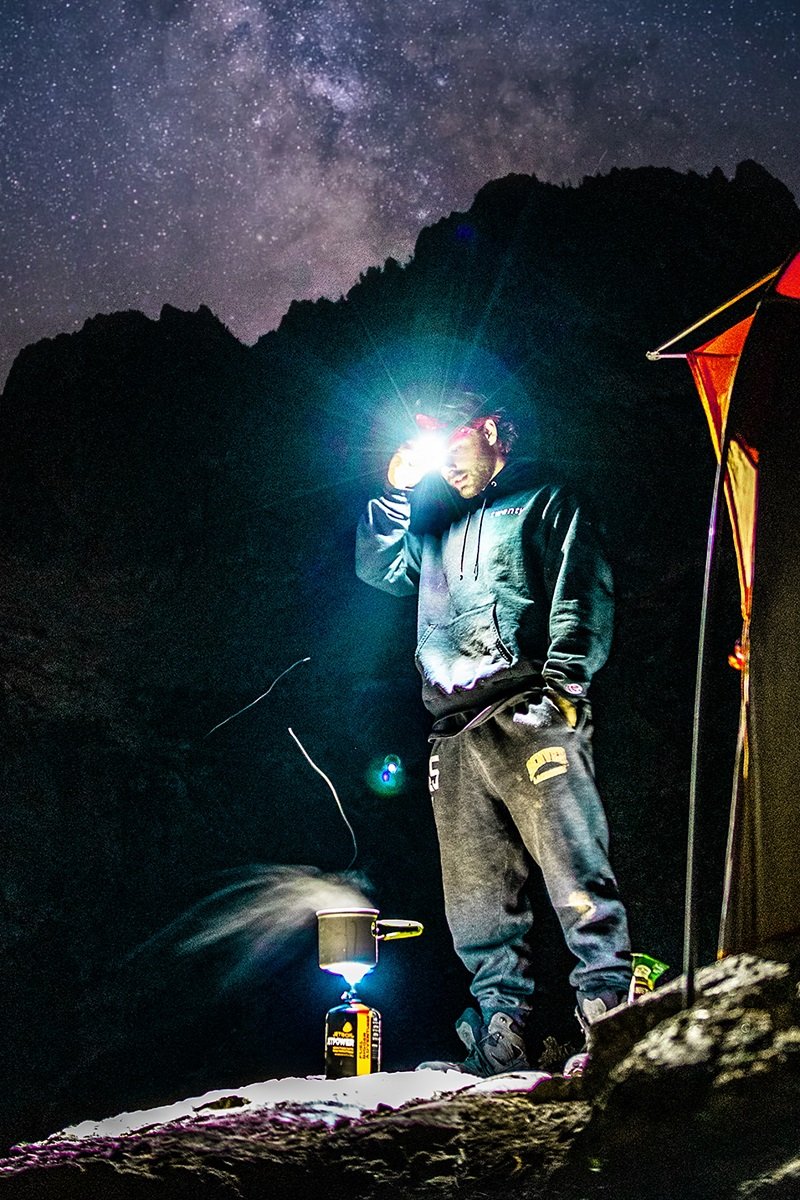
Which headlamp for hiking and trekking?
The choice mainly depends on the duration and conditions of your night hike.
Occasional early-morning hike
If you set off before sunrise and spend only a short time walking in the dark:
- A basic head torch is sufficient
- Moderate light output
- Average battery life
There’s no need to opt for a high-powered model if your use is occasional and brief.
Extended night hiking
If you’ll be walking for several hours after sunset:
Key priorities
- Low weight
- Comfortable fit on the head
- Reliable battery life
When trekking, every gram matters. A lightweight lamp significantly improves comfort over long distances.
Recommended beam type
Unlike trail running or mountain biking, hiking is done at a moderate pace. You therefore don’t need an extremely long beam range.
Favour:
- A wide beam (around 40°)
- Even light distribution
- Good peripheral visibility
This allows you to anticipate obstacles at a reasonable distance without creating a tunnel effect.
Which head torch is best for running and trail running?
For running, the requirements differ significantly from those for hiking or camping.
What to prioritise:
When running, your pace is faster. You need to anticipate obstacles earlier.
Key features:
- Long beam distance
- High light output
- Focused and dynamic beam pattern
- Excellent head stability
A head torch designed for trail running generally combines:
- A front-mounted lighting unit
- A rear battery pack to balance the weight
This distribution enhances comfort and minimises unwanted movement.
Rear visibility: a real asset
Many models include:
- A red rear light
It allows you to:
- Be visible on the road
- Signal your presence to other runners
- Increase safety during training or races
This aspect is often overlooked, yet it becomes crucial as soon as you run on tarmac or in a group.
Which head torch should you choose for ultra-trail running?
Ultra-trail running places far greater demands on your gear than a standard run. You’ll be running for long hours, often through the night, dealing with fatigue and unpredictable weather. Choosing the right headlamp becomes a strategic decision.
Brightness and beam distance
- At least 500 lumens
- Long-range, focused beam
- High-power mode that can be sustained over time
Battery life: a key factor
Unlike short-distance trail running, battery endurance is critical here.
You may be running:
- For most of the night
- Or even all night long
Prioritise:
- High-capacity battery
- Efficient medium-power mode
- Interchangeable battery or spare cells
Plan ahead with:
- An additional battery pack
or
- Backup AAA batteries
Battery management becomes a key performance factor.
A waterproof headlamp is essential
Weather conditions can change rapidly. A powerful head torch that’s not water-resistant is useless in a race situation.
- Reliable waterproof rating (able to withstand heavy rain)
Weight and comfort
You’ll be wearing it for several consecutive hours.
Keep an eye on:
- Overall weight
- Front/rear balance
- Stability without pressure points
A headlamp that’s too heavy will become a burden over time, even if its light output is excellent.
In summary
For ultra-trail running:
- ≥ 500 real lumens
- Focused long-distance beam
- Long battery life + backup solution
- Reliable waterproofing
- Controlled weight
If you have to prioritise: battery life and brightness come first. In ultra-trail running, a head torch isn’t just an accessory, it’s a piece of safety equipment.
Which head torch is best for mountaineering?
Mountaineering combines long physical activity, high altitude, demanding weather conditions and significant safety requirements. A head torch becomes an essential piece of equipment, not just a simple accessory.
Reliable battery life
When mountaineering, you may spend several hours walking in the dark, often before dawn.
- Long-lasting battery: choose models that can last an entire ascent without frequent recharging.
- Efficient intermediate modes: to preserve battery life without compromising safety.
- Spare batteries: useful for extended expeditions where recharging isn’t possible.
Balanced comfort / weight / performance
On a long route or alpine climb:
- Lightweight design: every gram matters over time.
- Good weight distribution: rear-mounted batteries help stabilise the fit.
A powerful, dependable light source should never become uncomfortable to wear.
Beam power and quality
Mountaineering requires:
- Adequate brightness to read the terrain and topography even from a distance.
- Mixed beam (wide for peripheral vision + long-range for anticipating terrain changes).
Resistance to extreme conditions
Weather in the mountains can be unpredictable:
- Reliable waterproof resistance against rain, snow and moisture.
- Cold resistance: some batteries lose capacity in low temperatures.
- Durable materials that can withstand impacts and abrasion.
In high-altitude environments, failure is not an option.
Useful additional features
Depending on your needs:
- Strobe or SOS mode (for safety)
- Red light for map reading, communicating with climbing partners or signalling your presence
- Accurate battery level indicator
The best headlamp brands are at Glisshop
If you’re looking for a headlamp, you’ll find at Glisshop the finest models from the most trusted brands in the outdoor industry: Petzl and Black Diamond.
Petzl headlamps: technical and high-performance
Petzl’s various ranges include lightweight, efficient models as well as high-output headlamps. Choosing one of the French pioneers in outdoor lighting ensures you get a reliable product, designed and engineered by professionals who are also passionate enthusiasts of the activities each lamp is made for. Among the flagship models are the Actik, the Actik Core, the Swift RL, the Tikka, the Tikkina and the Bindi.
Black Diamond: from entry-level to premium, for every adventurer
Black Diamond is an American brand headquartered in Salt Lake City, surrounded by lakes and mountains. It designs both straightforward headtorches and advanced models that are exceptionally powerful, durable, and waterproof.
Cutting-edge illumination with Ledlenser headlamps
Ledlenser headlamps stand out thanks to their High Power LED technology, offering multiple brightness levels. They provide long battery life and practical features such as a lock function to prevent accidental activation. These robust, waterproof headlamps are dependable and ideal for all outdoor pursuits.