


Camping and hiking tents

 FLASH DAYS
-
Recommended price
£307.91
-30%
£215.51
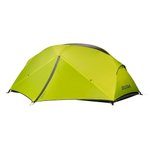 FLASH DAYS
-
Recommended price
£237.51
-35%
£154.35
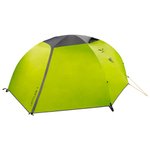 FLASH DAYS
-
Recommended price
£343.11
-35%
£222.99
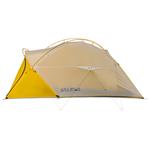
Lightweight, compact, waterproof and resistant to strong winds, the Salewa Litetrek II Lightgrey Cactus is a 2 person tent to camp in three seasons in optimum conditions.
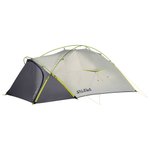 FLASH DAYS
-
Recommended price
£281.51
-35%
£182.95
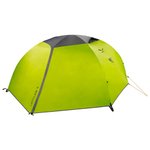 FLASH DAYS
-
Recommended price
£519.11
-25%
£388.87
 FLASH DAYS
-
Recommended price
£571.91
-25%
£428.47

Loading...
Find the right tent for your needs
Discover our selection of hiking, bivvying and camping tents, plus van shelters. A lightweight tent for trekking, a spacious model for several nights, or a shelter attached to a vehicle boot or side door: choose according to the number of people, your mode of transport and the level of comfort you require.
| Your requirement | The right model |
| Solo hiking | Lightweight, compact 1-person tent |
| Bivvying as a pair | 2-person tent with one or two vestibules |
| More comfort for two | 3-person tent with extra interior space |
| Long-distance trekking | Ultralight tent with a small packed size |
| Camping near a vehicle | More spacious tent, where weight is less of a constraint |
| Vanlife and road trips | Shelter or tent designed to attach to the boot or side door |
| Winter and exposed conditions | 4-season tent with a reinforced structure |
1, 2 and 3-person tents
The number of people directly affects weight, packed size and interior comfort. For multi-day trips on the move, choose a capacity close to the actual number of users. Extra room increases the load you have to carry.
1-person tents
1-person tents are designed for solo hikers who want to keep weight and bulk to a minimum in their pack. They provide an optimised sleeping area, but little space for storing kit inside.
A vestibule is particularly useful for keeping boots and a rucksack under cover without reducing the available sleeping space.
2-person tents
2-person tents are the most versatile format for a pair. Models with two entrances allow each occupant to access their sleeping area easily without disturbing the other person.
One or two vestibules also make it easier to store wet or bulky gear outside the inner tent.
3-person tents
3-person tents suit three campers or a pair looking for extra comfort. They allow you to keep some equipment inside and offer more room for multi-night stays.
However, this extra space means greater weight and bulk than a 2-person tent.
Lightweight and ultralight tents
For backpacking, trekking and bikepacking, a lightweight tent reduces fatigue and frees up space in your pack. Ultralight models use thin fabrics, lightweight poles or trekking poles to keep total weight down.
A very light tent often involves compromises on interior volume, material thickness or the number of features. The lightest model is therefore not automatically the most suitable choice.
- For a trek: prioritise weight, packed size and ease of pitching.
- For bikepacking: pay particular attention to the packed length of the poles.
- For camping: you can favour space and comfort over lightness.
- For frequent use: look for a good balance between weight and fabric durability.
Lightweight tent pegs can also help reduce pack weight or adapt your anchoring to the type of ground.
Dome and tunnel tents
The shape of a tent affects its interior volume, pitching process, weight and performance in the wind. Dome and tunnel designs meet different priorities.
Dome tents
A dome tent generally offers good interior volume and a stable structure. Many models are freestanding, which makes them easier to pitch on hard or rocky ground.
This format is well suited to camping, versatile bivvies and hikers who prioritise straightforward pitching.
Tunnel tents
A tunnel tent often delivers a strong balance between weight, usable length and internal space. It is particularly interesting for trekking and mobile camping.
However, it requires precise pegging out and must be correctly oriented in relation to the wind to maintain full stability.
3 and 4-season tents
3-season tents cover most bivvies and trips from spring through to autumn. They are designed for moderate weather conditions.
4-season tents are intended for winter or highly exposed environments. Their structure, poles and fabrics are reinforced to better withstand strong winds and snowfall.
At comparable capacity and product level, a 4-season tent is often heavier than a 3-season model due to its reinforced construction. Its design, generally more enclosed and with less mesh, prioritises protection from wind and snow over ventilation in warm weather.
Comfort and storage
At similar capacity and weight, several details can make the difference between two models:
- Entrances: two access points provide greater comfort in a tent used by two people.
- Vestibules: they let you store footwear, packs and wet equipment.
- Ventilation: it helps reduce condensation inside the flysheet.
- Internal pockets: they make it easier to organise small accessories.
- Interior height: it determines whether you can sit up or get changed more easily.
Pitching and attachment
A tent that is easy to pitch is a real advantage after a long day’s walking or when the weather turns. Check the number of poles, the type of clips, how easy it is to tension the flysheet and the quality of the guy lines.
For a vehicle shelter, check the attachment system, compatibility with the boot or side door, and whether the shelter can be quickly detached from the vehicle.
Fabric and waterproofing
Most tents and shelters use synthetic polyester or nylon fabrics. These materials help keep weight down, dry quickly and offer good durability for outdoor use.
Waterproof performance does not depend on the fabric alone. The quality of the seams, groundsheet, flysheet and overall design matters just as much.
To maintain performance over time, the tent or shelter should always be stored completely dry.
Protection and care
A footprint can protect the groundsheet from abrasion, stones and moisture. It is especially useful with an ultralight tent or on rough ground.
After each trip, remove soil from the pegs, check the seams and allow the fabric to dry completely before storage. A damp tent packed away for several days may develop odours, mould or deterioration of the coatings.
Van and vehicle shelters
Vanlife tents and shelters let you quickly increase the usable space around a vehicle. Depending on the model, they attach to the boot, tailgate or side door of a campervan, van conversion or passenger vehicle.
They can be used as a living area, storage space, sheltered kitchen or protection from rain and sun. They are particularly well suited to road trips, touring campsites and extended stays near the vehicle.
Before buying, check compatibility with your vehicle’s dimensions and opening system, as well as the type of attachment supplied.
Boot shelters
Attached to the rear of the vehicle, boot shelters create a protected area extending from the tailgate. They make it easier to access the sleeping area or equipment stored in the boot while adding extra privacy.
Side shelters
Side shelters are positioned along the sliding door or side of the vehicle. They provide a practical covered area for cooking, getting kitted out or setting up camping furniture.
Wide selection of tent brands
Discover models from the leading outdoor brands:
Tent and shelter FAQ
What size tent should I choose for two people?
A 2-person tent is enough for two people to sleep in. A 3-person tent is more suitable if you want extra space or wish to keep some of your kit inside.
What weight should a hiking tent be?
The right weight depends on the distance, elevation gain and number of people. To compare two models, look at the weight per occupant rather than the total weight.
Which tent should I choose for a trek?
Choose a lightweight, compact tent that is quick to pitch, with seasonality suited to the expected conditions. Also check its internal volume and wind resistance.
Is a 3-season tent enough in the mountains?
Yes, for many spring-to-autumn bivvies in moderate weather. A 4-season tent is better suited to winter, snow and very exposed areas.
What is a van shelter for?
It increases the living space around the vehicle and creates a protected area for storing gear, getting changed or accessing the sleeping area.
How do you attach a shelter to a vehicle?
The system depends on the model: straps, clips, rails, or attachment around the tailgate or side door. Always check compatibility with your vehicle before buying.