
CONTACT US   020 3129 3301

Our experts are here for you

Our passionate staff is with you through every step of your purchase and helps you choose the right gear that best suits your needs.

Mon-Fri 9am-12am / 1pm-6pm
(GMT+1)

020 3129 3301


With our Help Center

CONTACT
(= line.product.common.ancestorIds[1] || line.product.common.ancestorIds[0] || line.product.common.id =) (= line.quantity =) (= line.product.common.title =) (= line.unitAmountWithTaxes =) (= cartData.common.currencyCode =)
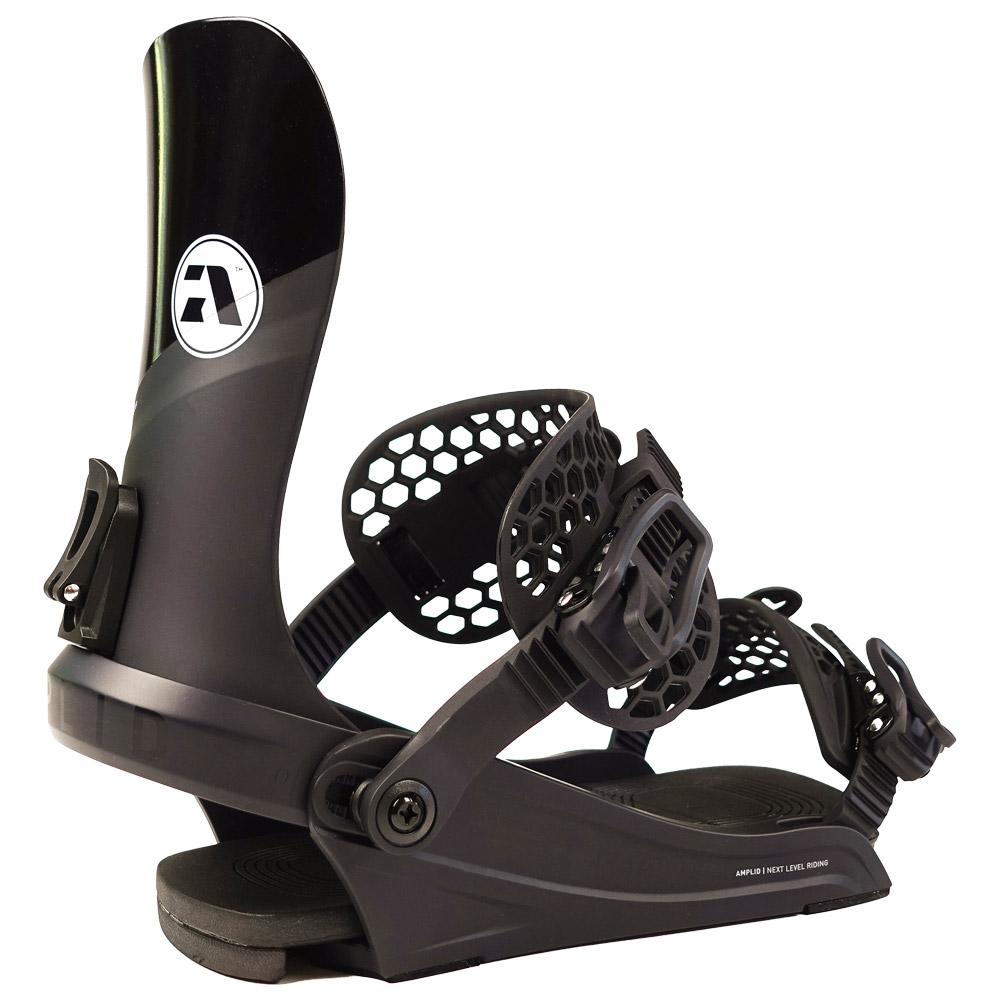
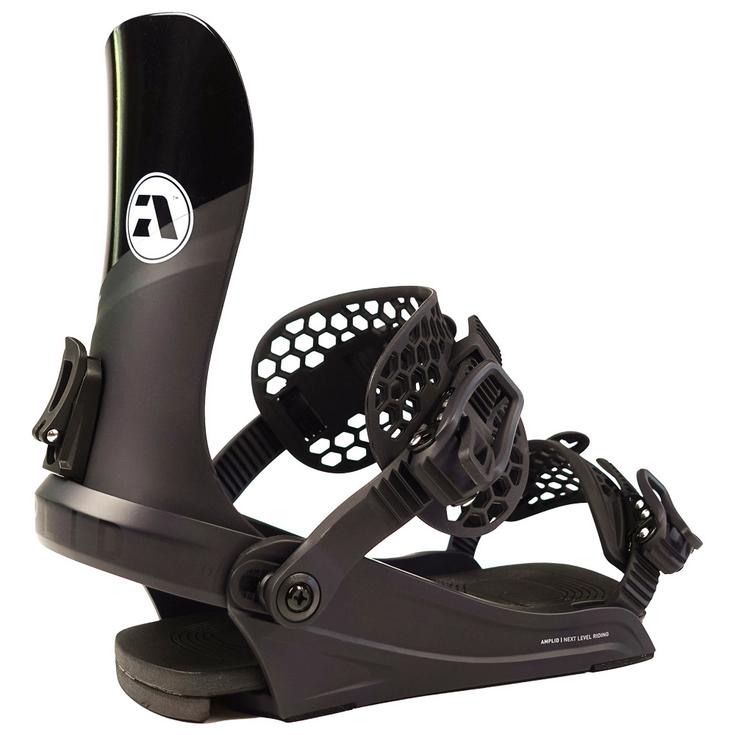
Amplid Snowboard Binding Proton C.I Overview

Amplid

Customer reviews

Snowboard binding Amplid Proton C.I

Amplid Snowboard Binding Proton C.I Overview
Amplid Snowboard Binding Proton C.I Side
Amplid Snowboard Binding Proton C.I Front
Amplid Snowboard Binding Proton C.I Behind

Amplid Snowboard Binding Proton C.I Overview
Amplid Snowboard Binding Proton C.I Side
Amplid Snowboard Binding Proton C.I Front
Amplid Snowboard Binding Proton C.I Behind
Brand Amplid

Snowboard binding Amplid Proton C.I

Customer reviews
  • Winter 2027
Please make sure the following options are correct
Please select the specs needed.
En rupture
  • SECURE PAYMENT

    by card

    View conditions
  • Custom fees included

    in the shipping fees

    View conditions
  • EASY 100 DAY RETURNS

    Fixed costs

    View conditions

Product description — Proton C.I

The Amplid Proton C.I. is the freeride binding in the Amplid catalog for riders who want precision without sacrificing feel. The carbon-fiber-reinforced injection-molded nylon chassis gives it a sturdy character: stiff where it counts, with direct power transfer, and lightweight enough not to weigh down your setup. A binding designed to go fast and hard on challenging terrain.

What’s the Amplid Proton C.I. binding’s purpose?

The Proton C.I. is built for freeriding and off-piste runs where every step counts. When the snow becomes variable, soft, or cross-groomed, power transfer is immediate: what you do with your foot is directly translated to the board, without delay. Both the spoiler and the baseplate feature a firm flex, resulting in solid support and crisp response in aggressive turns. The classic two-strap, ratchet closure system is a snowboard staple: you can adjust the tightness precisely for each session, and you’re ready to go.

Who is the Amplid Proton C.I. binding designed for?

The Proton C.I. is designed for intermediate to advanced riders who want a binding that leaves no doubt about its responsiveness underfoot. The fit is comfortable for long sessions in open terrain, with no annoying pressure points.

  • Riders looking to carve hard and ride fast on all types of snow
  • Freeriders who regularly venture off-piste and want control in all conditions
  • Riders who set up a precise and demanding setup on an off-piste-oriented board

Best suited if you want a responsive and direct binding for challenging terrain.

Best avoided if you’re looking for a flexible and forgiving binding for freestyle or features.

What are the main features of the Amplid Proton C.I. binding?

Responsiveness

Precision

Comfort

Can the Proton C.I.’s straps be adjusted without tools?

Yes, you can adjust the length of the ankle strap directly by hand, without a wrench or screwdriver. You can customize the fit to your boots in just a few seconds, even while wearing gloves.

What are the benefits of the carbon-fiber-reinforced nylon chassis compared to standard nylon?

Carbon-fiber-reinforced nylon is stiffer and lighter than standard nylon, which enhances power transfer without adding weight to the binding. The result: your board responds faster to your input, especially in high-speed turns.

Does the EVA baseplate absorb shocks well on hard snow?

The EVA layer under the base dampens vibrations and impacts, especially on hard or icy snow. It also preserves your board’s natural flex by preventing the binding from restricting it.

Brice

Snowboard expert

"Every rider has his own style and his gear must match. Freestyling, freeriding, splitboarding, I want you to find what you look for. Call me on 020 3129 3301."

Technical data Snowboard binding Proton C.I

  • Year

    Winter 2027
  • Entry System

    Classic
  • Level

    Intermediate - Advanced
  • Category

    Freeride
  • Compatibility Burton ICS

    Yes
  • Compatibility Insert 4X4

    Yes
  • Reference nr

    H27AMPLBIN592901
  • Gender

    Men
    Women
  • Comfort

    4
  • Reactivity

    5
  • Baseplate stiffness

    4
  • Highback Stiffness

    4
  • Straps Stiffness

    4
  • Sturdiness

    4

Tips and advice

For an optimum comfort and a safe ride, it is essential to set your bindings correctly. To do so, you need to take off the screws of the basplate with a Phillips screwdriver (4 screws for most bindings, 3 on some Burton's boards, and 2 Burton's boards featuring the ICS system on EST Burton's bindings).

Also, on some bindings, the plate is hidden underneath the gas pedal. To unscrew the plate, you need to take off the gaspedal first. You can do that by unscrewing it, or if there's no visible srew (on some Burton's bindings for instance), you need to pull the gaspedal upward to unblock it.

1. The bindings stance

The first thing to start with is your stance. Right foot in the fronf if you are Goofy, left foot in the front if you are Regular.

2. The stance width

Once you're correctly oriented, you need to set the stance width, i.e. the length of the gap between your feet. This width will vary depending on your style or on your board. Often, you'll notice some marks on the inserts. They show the standard stance recommended for the board. If you don't know what's your stance, use these marks for your first settings. If after riding you don't feel comfortable this way, you can always change these settings for a wider or narrower stance.

3. The bindings angle

Eventually, you'll need to set the angle of your bindings, that means you'll set the way your feet are oriented on the board. To do so, turn the plate until you reach the correct angle (written in degrees). Don't do this settings with the plate screwed on, or you'll damage the cranks of the plate or the baseplate.

Angle marks are going 3 by 3 (one mark equals 3 degrees). The classic angles for a beginner or a recreational snowboarder would be +15° for the front foot (toes pointing forward) and 0° for the rear foot.

If you're more into freestyle, you can try the "duck stance", it provides more stability on landings. The duck stance (also called mirrored) is very comfortable, but may not feel very natural at first. Start with a slight angle for the back foot. For instance, +15° for the front, -3° or -6° for the back. This is usually used for freestyle, on twin-tip boards. It allows an easier switch riding. Angle up the binding until you find the perfect stance. Freestylers usually ride with a centered stance angled at +15° / -15° for a better switch or regular riding, easier spins and stabler landings.

If you are more like a carver or a freerider, the angle will be set for easier high speed turns. That means both feet will be oriented forward. Try every angle and see how it feels. We recommend that you don't go below +15° for the front foot. Try to ride for a few hours and adjust your angles according to your feel. Common forward angles are +18° / +6 °.